


Education certainly forms a crucial part of one’s future, but at the same time, making appropriate career choices also form an integral part of leading a successful life. In today’s times, there are endless options available to students pursuing education in a variety of industries. Not only does good academic performance form the basis of selecting a proper career, but personal preferences, skills, and future goals are also very important.
As more and more individuals realize the importance of proper guidance, there has been an increase in the demand for career coaching services. With the fast-paced changes taking place in the industry, many students require assistance in deciding their future careers without any difficulty or stress. It is due to this reason that there are several career counseling centers offering guidance to students.
Students enrolled at kg2pgeduhub are offered personalized career coaching assistance where they are helped in discovering themselves and choosing a suitable career option in accordance with their future goals.
Career discovery not only entails choosing a career but entails knowing oneself and the aspects that motivate and inspire one as well as using innate talents to effect change. People often choose careers for reasons such as trends, parental pressure, and peers; after several years, they end up regretting their choice because they find themselves unsatisfied.
Discovering their areas of interest and strengths at an early stage will help students:
Self-discovery enables students to make informed decisions without experiencing any difficulties.
Kg2pgeduhub will help the students choose the right path by considering their individual strengths, likes, and future career aspirations. It will not just focus on offering general guidance but rather offer the students personalized assistance towards career planning.
Some of the things that the platform will help the students to do are:
The students who wish to get career guidance can choose the trustworthy platform of kg2pgeduhub for assistance.
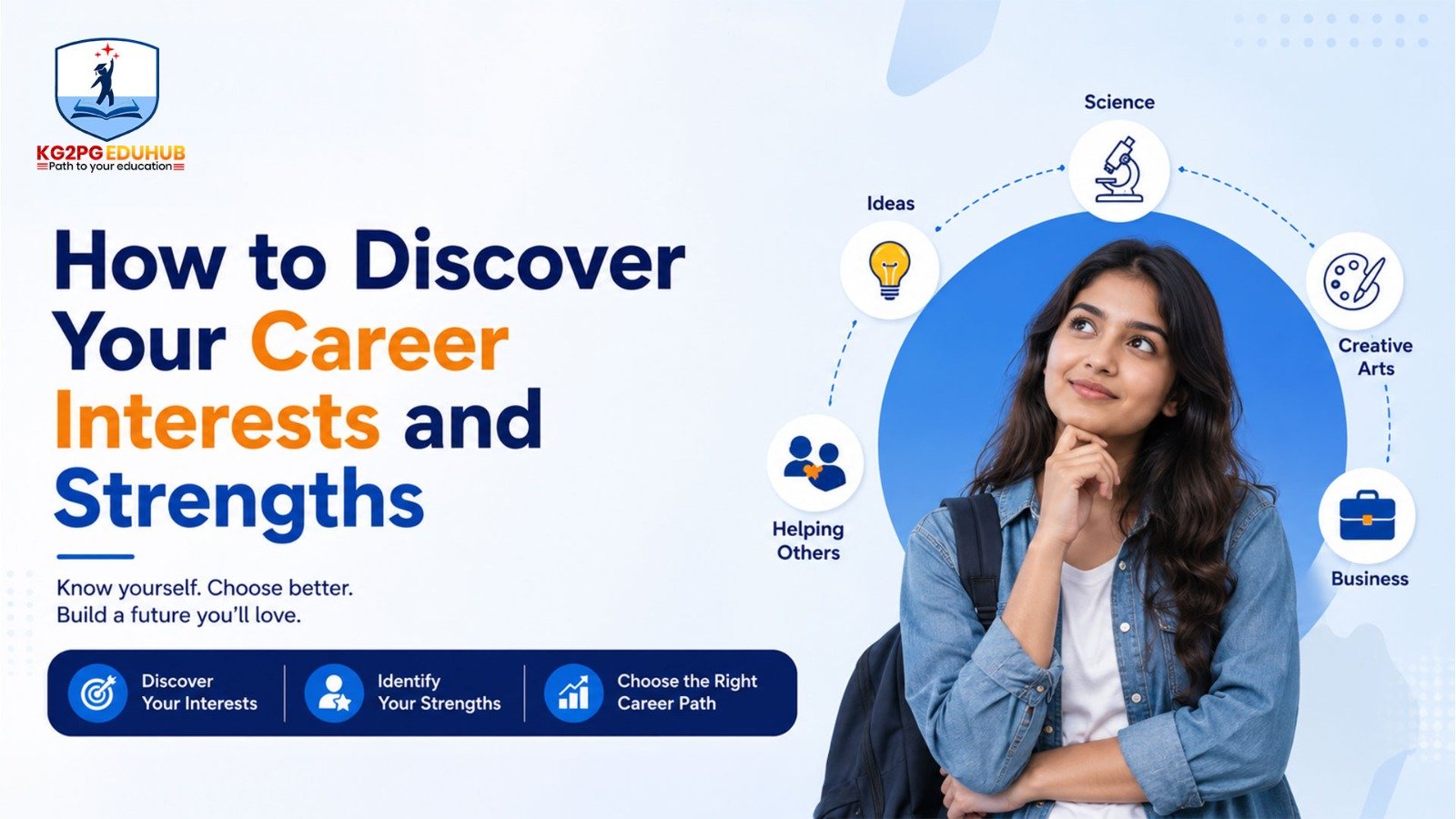
Before deciding on a career direction, students must consider two crucial components: career interests and personal strengths. Together, these aspects will assist individuals in identifying occupations where they can excel and remain motivated.
Career interest involves the tasks, topics, or fields of study that catch your interest and hold your focus. In general, interests involve what you find enjoyable to learn about, talk about, and engage in for leisure purposes.
Examples of career interests include:
Interest in a particular career is essential since workers tend to succeed when they are passionate about their jobs. Passion motivates people, increases productivity, and drives determination.
Students tend to use these terms interchangeably but they do not mean the same thing.
Skills
Skills refer to abilities gained through training, education, and experience. Examples include coding, writing, designing graphics, speaking in public, or analyzing data.
Talents
Talents refer to inborn abilities that are easy for a person to acquire. Students may have talents in communication, problem-solving, and thinking in innovative ways.
Strengths
Strengths refer to talents combined with skills. They reflect a person’s area of expertise or areas where he/she excels.
It is important for students to know the difference between the three since it will help them determine their talents and skills.
The issue of personality greatly impacts on how satisfied one is in his/her career. Each person is endowed with different behavior patterns that dictate how he/she interacts, communicates and works.
For example,
It becomes easier to thrive in a chosen profession when your personality matches it.
Discovering your interests is one of the first steps toward choosing the right career path. Many students struggle because they have never taken time to reflect on what genuinely excites and motivates them.
A simple way to identify your interests is by paying attention to activities that make you feel energized and engaged. Ask yourself:
Your answers often reveal important clues about your potential career interests.
Many successful careers begin as hobbies or personal interests. In today’s digital world, creative and unconventional career options are growing rapidly.
For example:
Students should not underestimate their hobbies. With the right guidance and skill development, passions can become rewarding career opportunities.
Self-reflection is a powerful tool in career discovery. Students should regularly ask themselves meaningful questions such as:
Honest answers can provide valuable direction during career planning.
Career exploration becomes more effective when students gain real-world exposure. Reading about careers is helpful, but practical experiences provide deeper understanding.
Students can explore careers through:
These experiences help students understand the realities of different professions before making long-term decisions.
Whereas interests assist students in determining their preferences, strengths aid in assessing their suitability for professional success.
Understanding your Natural Strengths
A natural strength is something that one excels at from a young age. There are students who instinctively arrange events, coordinate group work, resolve mathematical challenges, or teach others ideas.
The first step in recognizing natural strengths is self-reflection and self-assessment.
Some of the things that students should consider include:
Hard Skills vs Soft Skills: What Employers Value Most
Employers today look for a combination of technical knowledge and interpersonal abilities.
Hard Skills
Hard skills are measurable abilities gained through education or training. Examples include:
Soft Skills
Soft skills relate to communication, behavior, and emotional intelligence. Examples include:
While technical skills are important, soft skills often determine long-term career growth and leadership potential.
How Feedback from Teachers, Friends, and Mentors Can Help
Sometimes students fail to recognize their own strengths because they are too familiar with their abilities. Feedback from others can provide valuable insight.
Teachers, mentors, parents, and friends often notice strengths that students overlook.
For example, someone may consistently receive compliments for:
Listening to constructive feedback can help students gain confidence and clarity about their abilities.
However, students may be concerned about academics alone without realizing that they can leverage other abilities that are just as relevant when entering their careers.
Creativity and Innovation
A person whose thinking is out-of-the-box or who likes problem-solving in an innovative way might excel in fields such as media, marketing, design, and entrepreneurship.
Emotional Intelligence
People who are good at communicating, managing emotions, and interacting with others are very much sought after in areas such as leadership, healthcare, counselling, and business.
Adaptability
Students who are flexible and quick learners are well-suited to working in sectors where things are moving quickly.
Curiosity and Ability to Learn
Curious students who like discovering new ideas tend to advance quicker in their careers because lifelong learning is essential today.
Leadership and Collaboration Abilities
When someone can lead and coordinate others or is good at teamwork, they already have valuable workplace skills.
Career exploration allows students to know more about careers that suit their interests and talents.
Career assessments allow students to discover career paths that are most appropriate considering their personalities, interests, and competencies. These assessments will bring light and clarity, thus reducing confusion in career selection.
Career counselling assists students in recognizing what they can offer and make wise career choices.
Many students seeking career coaching services near me are looking for tailored guidance rather than generic advice. Students who receive career counselling will be guided in avoiding the usual mistakes when choosing their careers.
Internships and workshops give students hands-on experience while online classes give them the opportunity to acquire new skills and knowledge before deciding on careers.
Industry experts and mentors are valuable sources of information regarding industries, work environment, and prospects.
Career planning is associated with confusion and pressure.
Students may have multiple interests. It is important for them to try various options, find out what unites the chosen professions, and consult professionals.
Fear is always connected with lack of knowledge and uncertainty. Confusion can be reduced when students start learning about possible careers.
Making career decisions under the influence of trends, opinions of family members, or recommendations of friends will definitely not be satisfying in the future.
Confidence arises from gaining knowledge and developing relevant skills and abilities. Students should not compare themselves with others; they should work on their skills instead.
Career counselling helps students make informed and confident career decisions.
At kg2pgeduhub – career counselling, students receive personalized guidance based on their strengths, interests, and career goals.
The counselling process helps students:
Professional career guidance helps students:
Every student is unique, which is why personalized career planning is important. Customized guidance helps students stay focused and prepared for future success.
Career action planning is useful for helping students translate their goals into tangible actions.
Students must establish specific academic, skills-related, internship, and professional career goals.
It is important to develop communication, leadership, technical, and problem-solving skills.
Self-confidence can be built through participation in activities, gaining experience, and being proactive.
Continuous monitoring of skills, accomplishments, credentials, and experience allows students to remain goal-focused.
Career selection is among the significant decisions that a student needs to make in life. Finding out the careers you have an interest in and the skills you possess will allow you to find out your areas of strength and weakness. As a result, you will be able to know more about yourself and make academic and professional decisions. It is important for students to make academic and career decisions based on their skills.
A lot of students select their careers without taking into account their interest. They do this because they want to follow the trend, feel pressured by society and friends, and meet their family's expectations. They usually regret making such mistakes. Students need to focus on themselves and discover more about their strengths and weaknesses. Attending career workshops, internships, aptitude tests, and counseling will be beneficial to them in finding out more about their future career.
Career guidance is equally important for students when deciding on what career to pursue in the future. If you are a student or parent looking for career coaching services in your area, kg2pgeduhub – Career Counselling